In today’s rapidly evolving business landscape, Digital Marketing has emerged as not just an optional channel but a core component of marketing and business growth strategy. The scope of digital marketing is broad, deep and continuously expanding — for businesses, careers, technologies, and global markets. In this extensive article, we’ll explore the wide-ranging scope of Digital Marketing across many dimensions — strategy, business value, channels, career paths, technologies, regional markets, emerging trends, challenges, and future outlook.
1. What is Digital Marketing?

To begin with, it’s important to define Digital Marketing. According to the marketing glossary, digital marketing (also called online marketing) is “the promotion of brands to connect with potential customers using the internet and other forms of digital communication.”
Key points:
- It uses digital channels like search engines, social media, email, websites, mobile apps, and other online media.
- It involves activities such as SEO (Search Engine Optimization), content marketing, social media marketing, paid-advertising (PPC), email marketing, mobile marketing, affiliate marketing, etc.
- It emphasizes measurable outcomes, data-driven decisions, and interactive two-way communication.
Thus, Digital Marketing isn’t just “doing marketing online” — it’s a strategic transformation of how brands engage, attract and convert customers in the digital era.
2. Why the scope of Digital Marketing has expanded
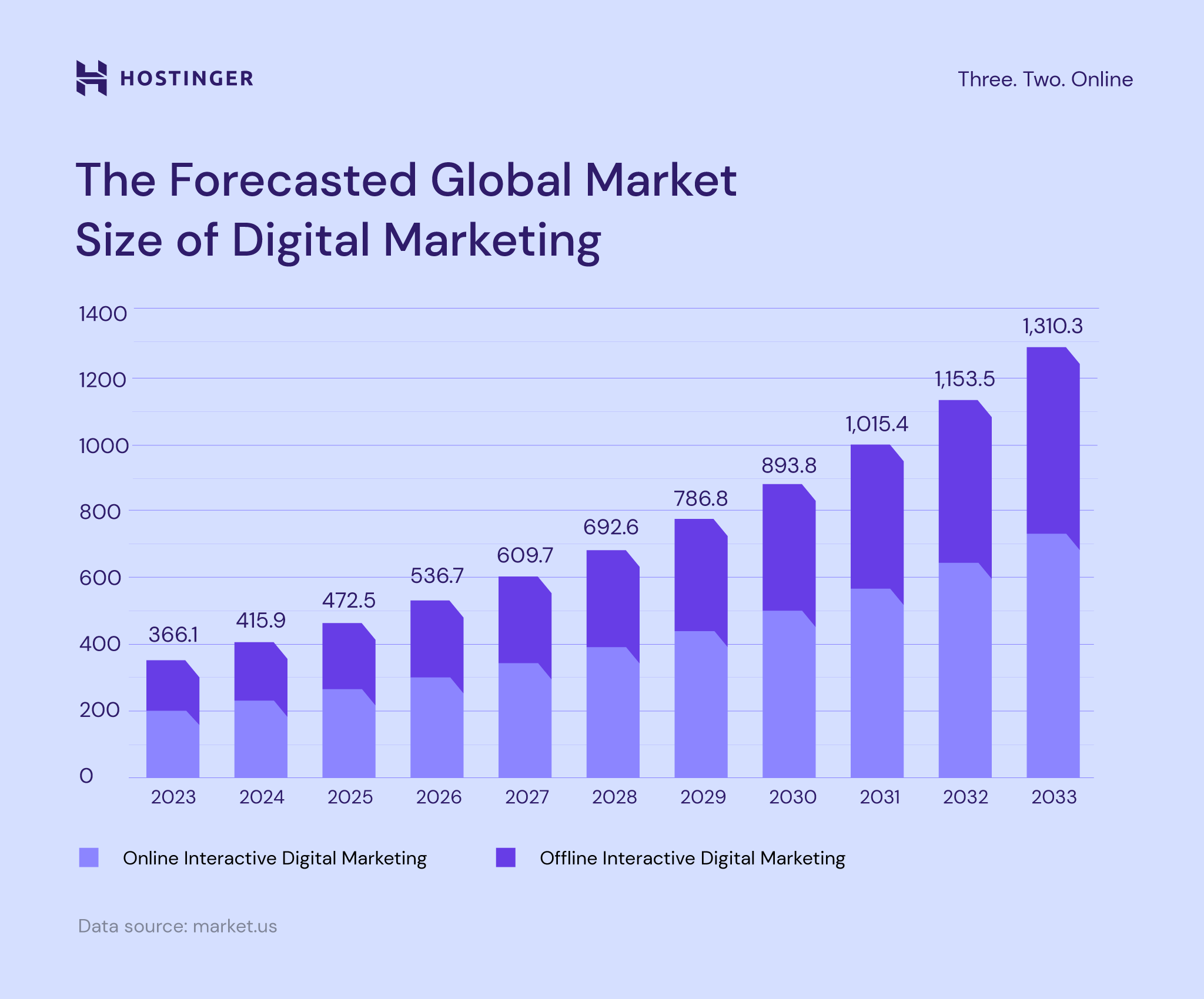
There are several reasons the scope of digital marketing has grown so significantly:
- The sheer growth in internet users globally means more people are online, searching, socialising, buying. For example, one source mentions that as of April 2024 there were 5.44 billion internet users worldwide (~67 % of global population).
- Mobile penetration and mobile internet usage have surged — making mobile-first or mobile-optimised digital marketing essential.
- The ability to measure, track and optimise campaigns in real-time gives digital marketing a huge advantage over many traditional media.
- Cost-effectiveness: digital channels often allow smaller budgets and more precise targeting (demographics, interests, behaviours) to drive ROI.
- The shift in consumer behaviour: more purchases, research and decisions happen online. Hence brands must follow the customer’s journey into digital.
- Technology and innovation: tools like analytics, automation, AI, voice search, AR/VR are pushing the possibilities of digital marketing.
Together these factors mean that digital marketing is much more than a buzzword — it’s becoming a fundamental capability for organisations and individuals.
3. The Business Scope of Digital Marketing
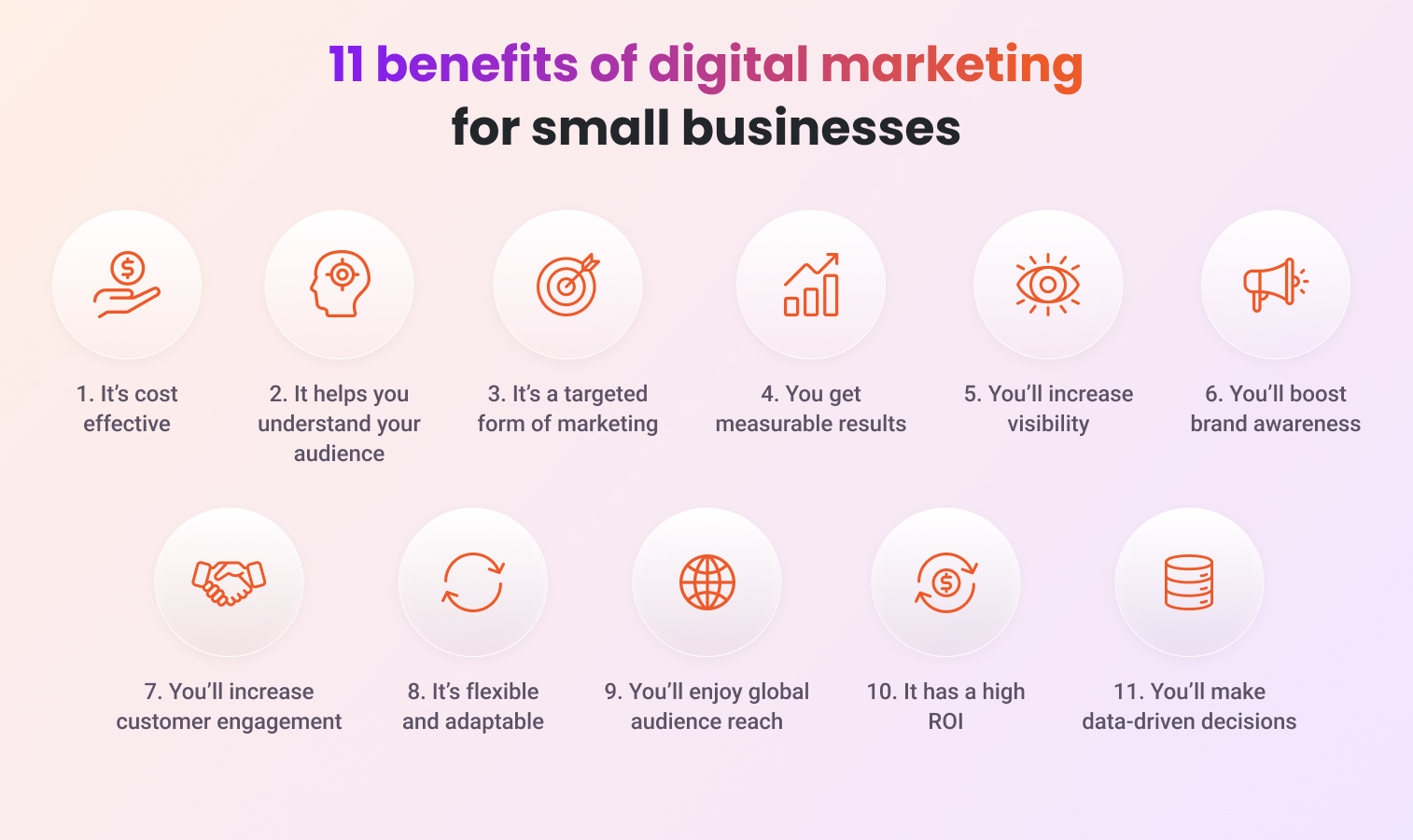
From a business perspective, the scope of digital marketing spans many strategic areas:
3.1 Brand awareness and visibility
By leveraging social media, search engines, content marketing and paid ads, a brand can significantly expand its reach and visibility. Digital marketing enables global reach, but also hyper-targeting of specific segments.
3.2 Lead generation and sales growth
Digital campaigns can be structured to drive measurable actions — clicks, form fills, purchases. With the right optimization, digital marketing becomes a revenue driver, not just a branding exercise. Research confirms a positive impact of digital marketing tools on business performance.
3.3 Customer engagement and retention
Unlike many traditional channels, digital marketing supports real‐time interaction (comments, chats, social responses) and enables nurturing through automated email, retargeting ads, personalised content.
3.4 Cost optimization & ROI tracking
With digital, every click, view, conversion can be tracked. Campaigns can be tweaked mid-flight. For many businesses, this means better returns on marketing spend compared to traditional media.
3.5 Market expansion & scalability
Small local businesses can scale nationally or globally with digital campaigns. Digital marketing reduces geographic constraints. Also, digital marketing supports scalability: what works can be scaled up or down relatively easily.
3.6 Data-driven decision making
With digital analytics, businesses can capture user behaviour, campaign performance, channel effectiveness. This supports better decisions, faster adaptations, and more competitive edge.
Given all these business benefits, the scope of digital marketing is very wide — every organisation that wants to grow, optimise costs, engage customers and adapt to digital consumer behaviour has to take this seriously.
4. Core Channels & Sub-Domains of Digital Marketing
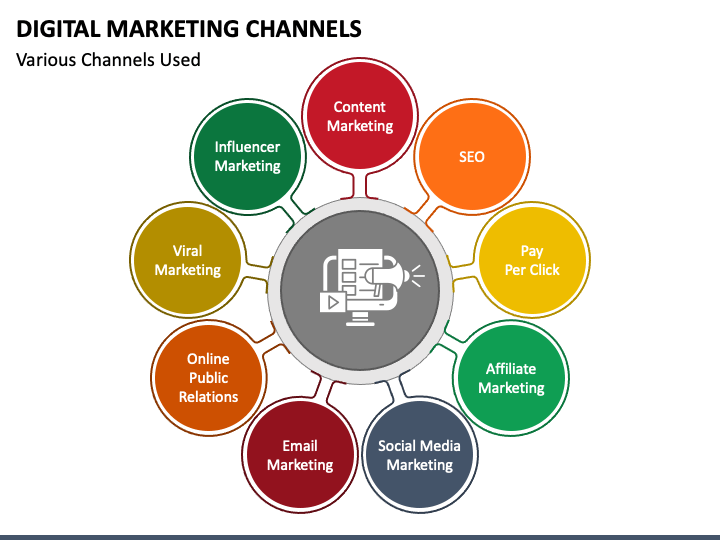
When we talk about the scope of digital marketing, it’s helpful to break it down into major channels and sub-domains. Here are several:
- Search Engine Optimization (SEO) – improving website visibility for relevant keywords so organic traffic increases.
- Pay-Per-Click Advertising (PPC) – paid search ads, display ads, social media advertising where you pay per click or impression.
- Content Marketing – creation and distribution of valuable, relevant content (blogs, videos, infographics) to attract and retain audience.
- Social Media Marketing – using platforms like Facebook, Instagram, LinkedIn, Twitter, TikTok to build brand, engage users, run ads.
- Email Marketing – sending targeted messages to an audience, nurturing leads, promoting offers.
- Affiliate Marketing & Influencer Marketing – partnering with third parties/influencers who promote your products/services for commission or sponsorship.
- Mobile Marketing – targeting users on mobile devices via apps, SMS, push notifications, mobile web.
- Online Reputation Management (ORM) – managing brand perception online, reviews, social presence.
- Analytics & Data-Driven Marketing – using data, measurement, and insights to optimize performance, personalization, targeting.
- Emerging technologies & channels – voice search marketing, visual search, AR/VR marketing, chatbots, AI-driven marketing.
Because the scope covers so many channels, professionals and businesses must often select the mix that aligns with their audience, goals, budget and stage of growth.
5. Career and Job Scope in Digital Marketing
The scope of digital marketing as a career option is also very wide and very promising. Here are key aspects:
5.1 Diverse job roles
Professionals can specialise in many roles: SEO Specialist, PPC Specialist, Social Media Manager, Content Marketing Manager, Email Marketing Specialist, Analytics/Insight Manager, Digital Marketing Manager, Growth Hacker, Performance Marketer, etc.
5.2 Skills in demand
Some of the core skills: understanding of digital channels, analytics, content creation, paid-media management, conversion optimisation, marketing automation tools, data visualization, and increasingly AI/ML in marketing.
5.3 High demand & good salary prospects
As more companies adopt digital strategies, demand for digital marketers increases. One source suggests that jobs in digital marketing are increasing and demand is strong.
5.4 Remote work & flexibility
Digital marketing roles often lend themselves to remote work or flexible working — as the primary workspace is online. This further increases their attractiveness.
5.5 Transition from traditional marketing
Many professionals from traditional marketing are transitioning into digital marketing roles — the scope is broadening and gives more options.
5.6 Lifelong learning & evolving roles
Because technologies and platforms change fast, effective digital marketers need to keep learning. This means the role is not static — it evolves.
In short, for individuals exploring a future-oriented career, digital marketing offers a large and growing playground.
6. Geographic & Market Scope (With Focus on India)
6.1 Global market perspective
Digital marketing spending worldwide continues to climb. As consumers globally spend more time online, businesses increase their digital budgets accordingly.
6.2 India and emerging markets
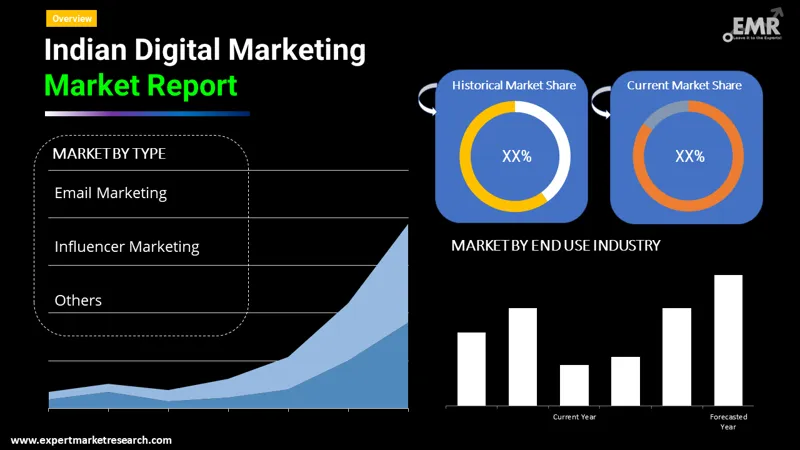
In India, the digital marketing ecosystem is growing rapidly — driven by mobile internet, rising e-commerce, increased adoption of digital payments, and government digital initiatives. One source notes that digital marketing is expanding quickly in India.
6.3 Industry verticals & segments
Digital marketing’s scope extends beyond e-commerce and retail — it is used in B2B, services, healthcare, education, fintech, entertainment, travel and more. Every sector with a digital interface or customer touchpoint is a candidate.
6.4 Small businesses, start-ups & MSMEs
One of the strengths of digital marketing is that even smaller organisations with limited budgets can utilise its tools and channels to compete and scale. This greatly expands the scope at the micro-business level as well.
6.5 Global audience and localisation
With digital marketing, firms can reach global audiences but must adapt to local languages, cultural nuances, device usage patterns. Thus the scope spans both global and local strategies.
Thus, the geographical and market scope is vast — from local neighbourhood businesses to multinational brands, all leveraging digital marketing channels.
7. Emerging Trends Expanding the Scope of Digital Marketing

Looking ahead, the scope of digital marketing is being broadened by several emerging trends:
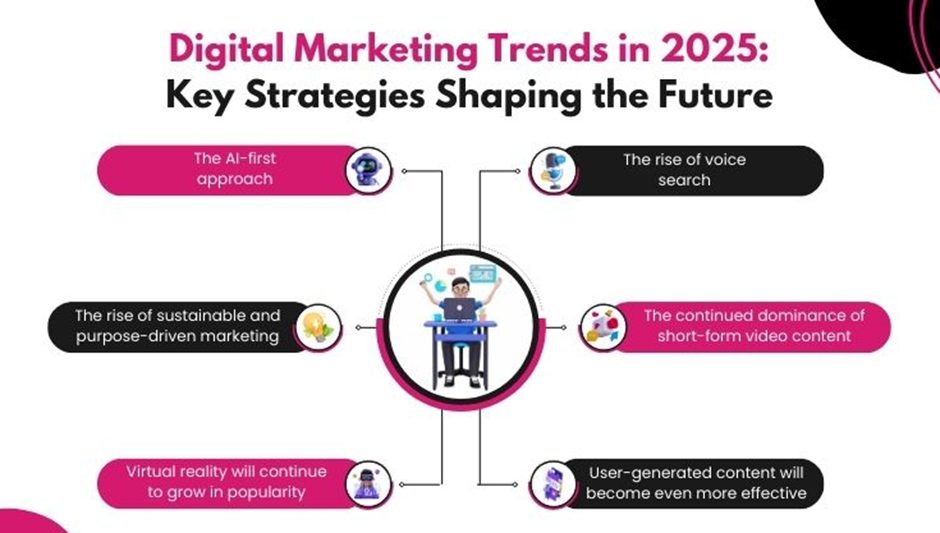
- Artificial Intelligence (AI) & Machine Learning (ML) – AI is being used for predictive analytics, personalization, customer segmentation, automation of repetitive tasks.
- Voice Search & Smart Assistants – With the rise in voice-enabled devices, marketers are optimizing for voice queries and conversation-based search.
- Augmented Reality (AR) / Virtual Reality (VR) – Immersive experiences via AR/VR create new interactive marketing possibilities.
- Visual Search & Image/Video Based Marketing – As users shift to images/videos for discovery, digital marketing includes optimizing visual content and emerging platforms like short-form video.
- Data Privacy, Ethics & Regulation – With more data-driven marketing, privacy regulations (GDPR, CCPA) and ethical data use become critical. This creates both constraints and scope for marketers who manage compliance.
- Marketing Automation & Omnichannel Integration – Seamless experience across channels (web, mobile, in-store, social) requires integrated digital marketing orchestration.
- Customer Experience (CX) & Personalization – Providing tailored experience has become a key differentiator; digital marketing scope now includes UX, personalization engines, customer journey optimisation.
- Influencer & Micro-influencer Marketing – Leveraging individuals with niche audiences for brand promotion is an expanding sub-domain.
- Sustainability & Purpose-Driven Marketing – As consumers care more about values, digital marketing scope extends into communicating brand purpose, sustainability efforts, and social impact.
These trends mean that the scope is not static — it keeps shifting and expanding as technology, consumer behaviour and business models evolve.
8. Challenges & Boundaries in the Scope of Digital Marketing
While the scope is vast, there are important challenges and limitations that marketers must acknowledge:
- Intense competition & noise – As more organisations adopt digital marketing, standing out becomes harder. Marketers need to be more creative, targeted and efficient.
- Data privacy and regulation – Stringent rules around data collection, storage and usage (such as GDPR, CCPA) add constraints. Marketers must navigate legal and ethical dimensions.
- Rapid technology changes – New channels, algorithms, platforms change fast; keeping skills and strategies updated is a challenge.
- Talent & skills gap – With evolving roles, demand for digital marketing talent often outpaces supply; training and upskilling become essential.
- Attribution & measurement complexities – With multiple channels and devices, attributing impact and ROI accurately remains difficult.
- Customer expectation & experience – Consumers expect seamless, fast, engaging experiences; failures in UX, speed, privacy can hurt brands.
- Budget limitations for smaller businesses – While digital marketing is more accessible, effective campaigns still require investment in tools, expertise, content.
- Dependence on platform algorithms – Changes in Facebook, Google, TikTok algorithms can impact results dramatically, introducing risk.
- Global/local balancing – Operating globally online still requires localisation expertise: language, culture, legal jurisdiction, payment methods.
Recognising these challenges helps understand that while the scope is expansive, success isn’t guaranteed — strategic planning, continual learning and disciplined execution are required.
9. Strategic Framework: How to Approach the Scope of Digital Marketing
To fully exploit the scope of digital marketing, businesses and individuals should approach it strategically. Here’s a condensed framework:
9.1 Define objectives & audience
First, what do you want to achieve (brand awareness, leads, sales, retention, engagement)? Then, identify the target audience, their behaviours, channels, devices.
9.2 Select the right channels and mix
Based on audience and objectives, select relevant channels (SEO, PPC, social, email, affiliate etc). Avoid spreading too thin; focus where your audience is active.
9.3 Content & creative
Content is a key driver in digital marketing. Quality, relevance, frequency matter. Creative must align with channel and audience preferences.
9.4 Measurement & analytics
Establish KPIs, track metrics (traffic, conversions, engagement, cost per acquisition, lifetime value). Use analytics tools to monitor and optimise.
9.5 Optimization & testing
Run A/B tests, experiment with different creatives, landing pages, channels. Use data to refine campaigns and allocate budgets to best-performing channels.
9.6 Integration & customer journey
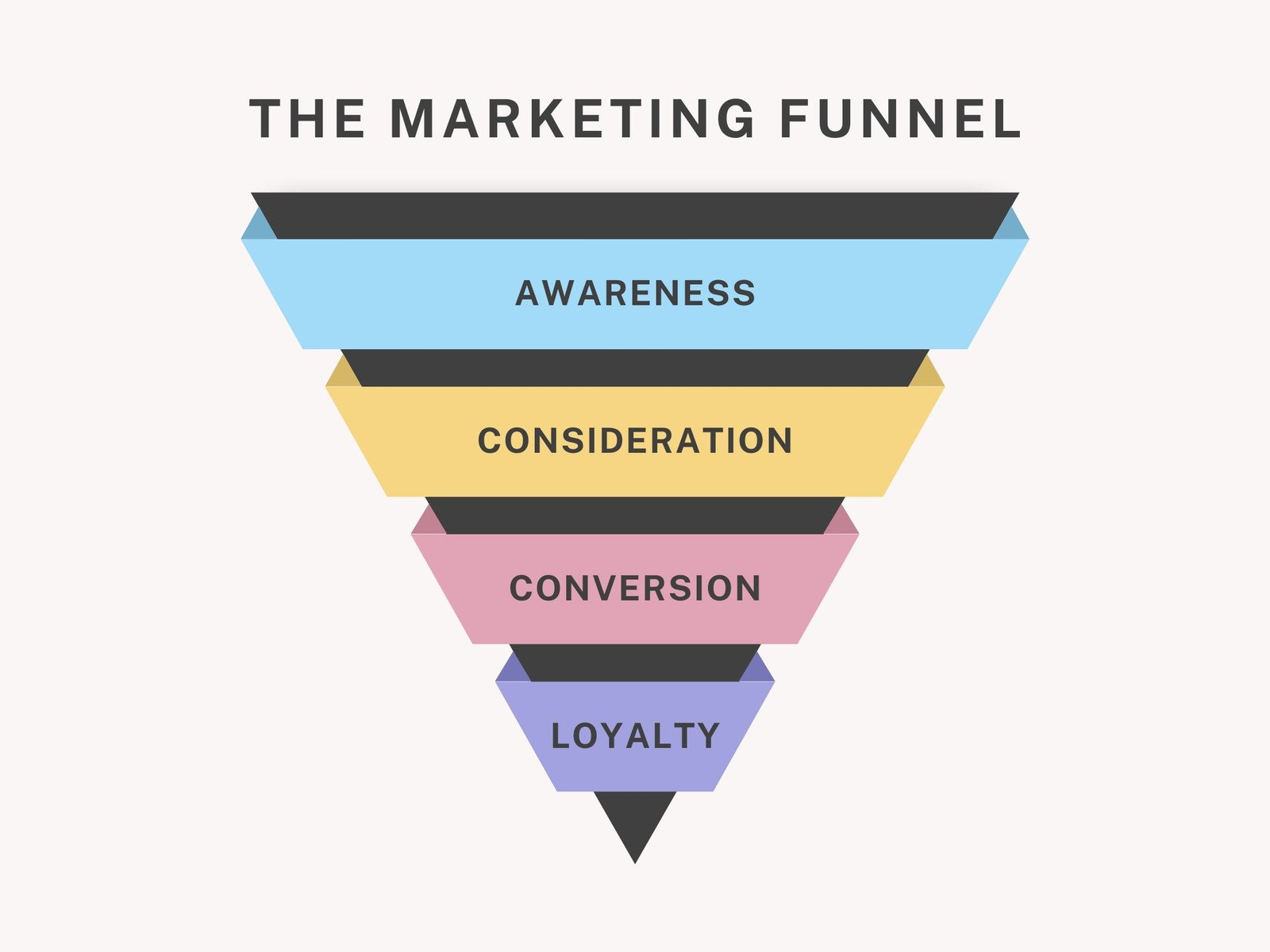
Ensure consistent messaging across channels and stages of the customer journey (awareness → consideration → decision → loyalty). Digital marketing isn’t siloed.
9.7 Emerging tech & innovation
Keep an eye on new channels, platforms, technologies (AI, voice, AR/VR, chatbots). Early adoption can provide competitive edge.
9.8 Compliance & ethical practice
Ensure data privacy, transparency, compliance with regulations. Build trust with customers.
9.9 Upskilling & organisational readiness
Ensure teams are trained, tools are in place, processes are agile. Digital marketing scope requires organisational alignment.
By following a structured strategy, businesses can harness the full scope of digital marketing rather than randomly deploying tactics.
10. The Future Outlook: What the Scope of Digital Marketing Holds

Looking ahead, here’s what we can reasonably project about the future scope of digital marketing:
10.1 Greater integration of AI and automation
As mentioned earlier, AI will play a bigger role in personalization, predictive analytics, content generation, optimisation of campaigns. This means digital marketing will become more intelligent and efficient.
10.2 Multi-channel & omnichannel experiences
Customers will expect seamless experiences across devices and platforms — online, mobile, voice assistants, in-store. Digital marketing will need to orchestrate these multiple touch-points.
10.3 More immersive & interactive content
AR/VR, interactive video, live streaming, shoppable video will become more mainstream. The scope will shift from “just reach and click” to “immersive engagement and experience”.
10.4 Enhanced privacy, ethics and trust
As consumers become more aware of how their data is used, digital marketing will need to emphasise transparency, value exchange (what I give vs what I get), and responsible use of data.
10.5 Niche & hyper-targeted marketing
With more behavioural, contextual and device data, digital marketing will allow ultra-targeting: smaller micro-segments, tailored content, dynamic creative optimisation.
10.6 Growth in voice, visual, and ambient search
With smart speakers, wearables, IoT devices, “search” is expanding beyond typed queries — voice and visual search will grow, and digital marketing strategies will adapt.
10.7 Global-local hybrid strategies
Digital marketing allows global scale but local execution. More brands will adopt “glocal” strategies: global brand, local relevance.
10.8 Continuous upskilling and agile marketing organisations
Because the scope keeps evolving, marketers and organisations will need to be agile, continuously learning and adapting. The job of digital marketer will evolve rapidly.
In summary, the future scope of digital marketing is not static or bounded — it keeps expanding in multiple dimensions, which means both opportunity and complexity.
11. Final Thoughts

If you are a business owner, marketer, student or someone considering a career in marketing — now is a compelling time to engage with digital marketing. The scope of digital marketing is more than just “doing ads on Facebook” or “writing blog posts”. It is about evolving how you connect with customers, how you drive growth, how you adapt to a digital-first world.
For businesses: ask yourself — are you leveraging the full scope of digital marketing? Are you using data, analytics, mobile, content, social, automation, integrated into your marketing strategy? If not, you may be missing huge opportunities.
For individuals: the skills you build in digital marketing today — analytics, content creation, SEO, paid-media, social strategy, automation — will open doors. The scope of digital marketing careers will continue to widen.
In conclusion, the scope of digital marketing is vast, dynamic, and opportunity-rich. It spans technology, strategy, channels, business value and human skills. Embracing it means positioning yourself, your business, your brand for growth in the digital era.